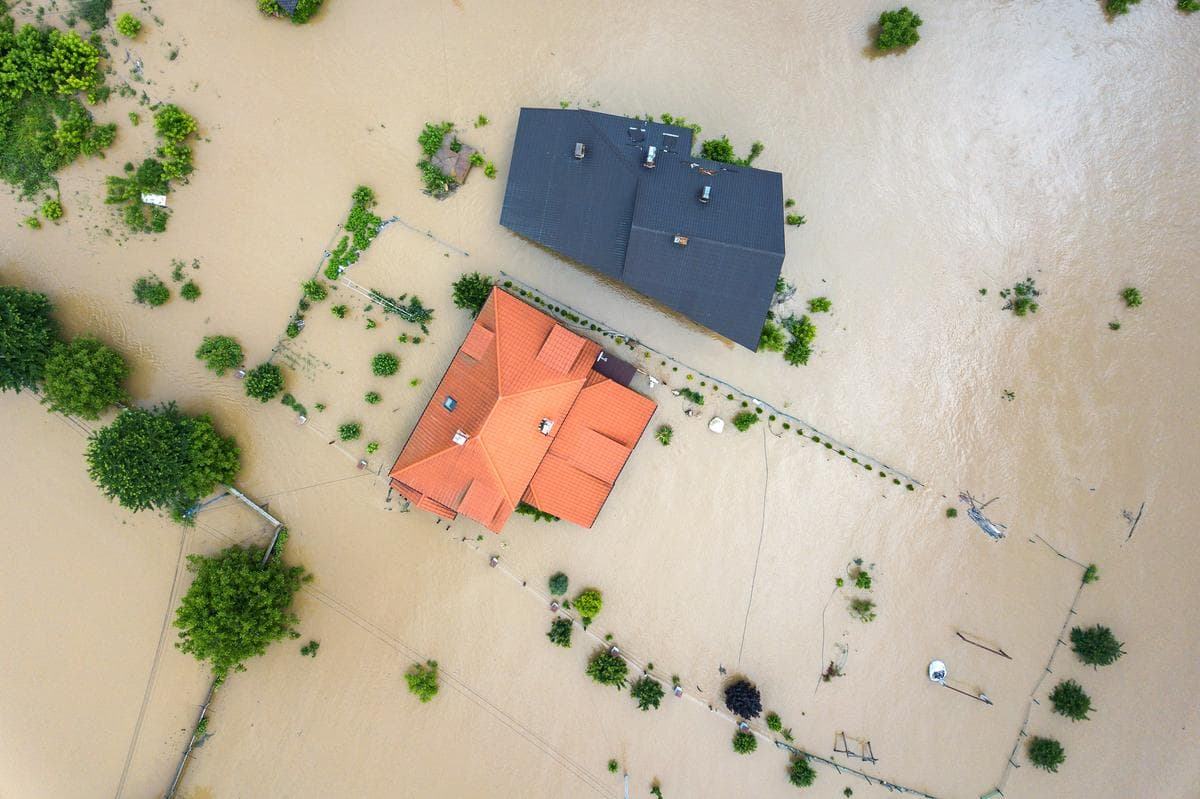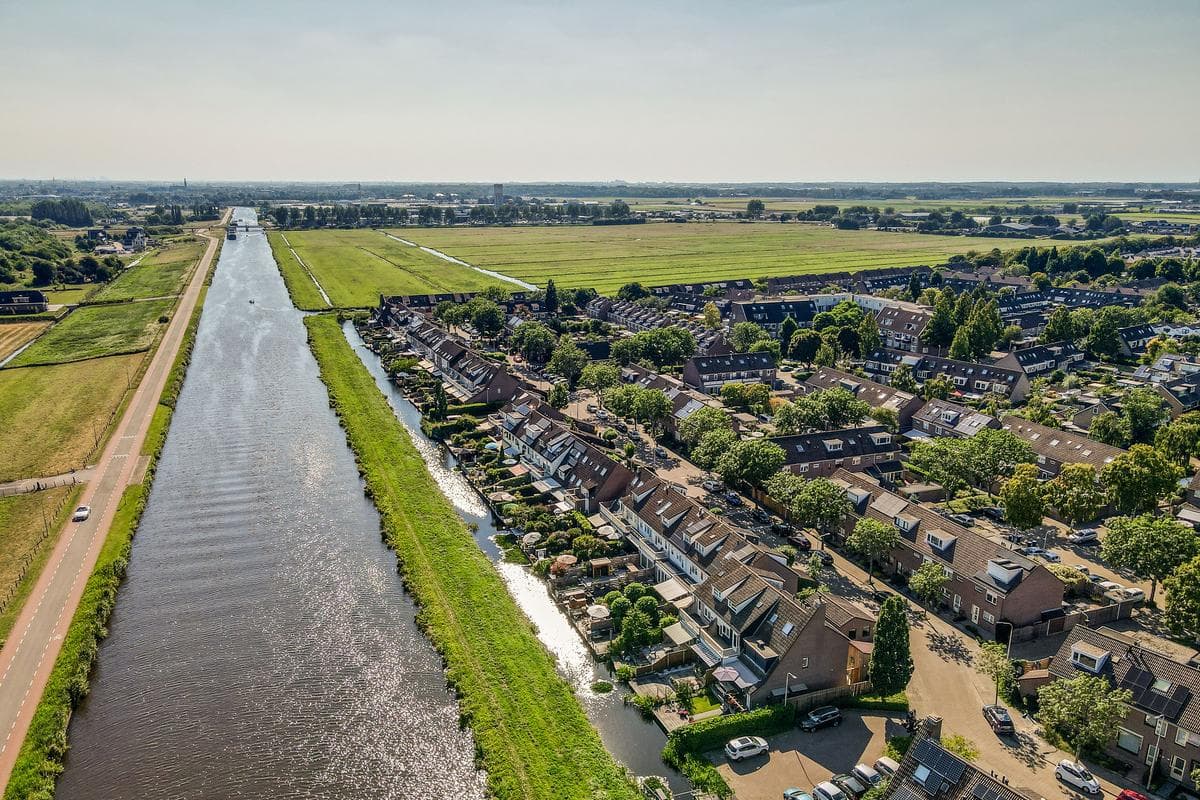
Climate risk is a pricing factor in Dutch housing, not a distant abstraction: about 26% of the country lies below sea level, and KNMI projects 15 to 35 cm of sea level rise by 2050. Properties in recognised flood zones already sell for roughly 3 to 8% less than comparable homes outside them, and annual flood damage is projected to reach €1.5 billion by 2050. Three risks matter when buying. Flooding is highest in river floodplains, coastal areas below NAP and deep polders. Heat stress is an urban problem — dense city centres with little greenery and single-aspect apartments under uninsulated roofs — and heat-related deaths have doubled in a decade. Subsidence and groundwater change drive the foundation problem that affects roughly 500,000 Dutch homes, because wooden piles rot once the water table drops below them. Practical checks before bidding: the flood risk map for the address, the foundation risk class in the valuation report, the energy label, and whether the roof and glazing can cope with summer heat.
The Netherlands sits largely below sea level, making climate risk not theoretical but existential. Rising seas, extreme rainfall, and heat stress are already affecting property values, insurance premiums, and livability. Smart buyers factor climate resilience into every purchase decision.
Key Climate Facts
- • 26% of the Netherlands is below sea level
- • Sea level rise: 15-35cm by 2050 (KNMI projections)
- • Flood damage costs: €1.5 billion annually by 2050
- • Heat stress deaths doubled in the last decade
- • Properties in flood zones sell for 3-8% less
Flood Risk Zones
High Risk
River floodplains, coastal areas below NAP, deep polders.
• South Holland coast
• River delta (Dordrecht)
• Deep polders (Haarlemmermeer)
Medium Risk
Urban areas with poor drainage, low-lying neighborhoods.
• Amsterdam canal district
• Rotterdam south
• Utrecht lowlands
Low Risk
Elevated areas, sandy soils, well-drained regions.
• Veluwe region
• Limburg hills
• Drenthe plateau
Heat Stress
Urban heat islands are an increasing concern. Dense city centers can be 5-8°C warmer than surrounding areas during heatwaves. Properties near parks and water bodies maintain better livability and value.
Heat Stress Impact on Property
High Heat Stress Areas
- • Dense urban centers with little green space
- • South-facing apartments without AC
- • Top-floor units with flat roofs
- • Streets with no tree canopy
Climate-Resilient Features
- • Near parks or water (2-3°C cooler)
- • Green roofs and gardens
- • Good insulation (works both ways)
- • Cross-ventilation design
Soil Subsidence (Bodemdaling)
The Silent Threat
Peat soils in western Netherlands are sinking 5-10mm per year. This causes foundation damage, cracked pipes, and uneven roads. Climate change accelerates this through drought cycles.
Annual Damage
€22 billion
Homes Affected
1 million+
Worst Areas
Randstad
Insurance Implications
Standard home insurance (opstalverzekering) covers storm and water damage from above (rain, burst pipes) but typically excludes flooding from rivers or sea. Separate flood insurance is not widely available in the Netherlands—the government acts as insurer of last resort through the Water Act.
What's Covered vs Not
✓ Typically Covered
- • Storm damage
- • Rainwater intrusion
- • Burst pipes
- • Hail damage
✗ Typically NOT Covered
- • River/sea flooding
- • Groundwater rise
- • Soil subsidence
- • Foundation failure
Climate-Proofing Your Purchase
Check Before Buying
- •Check klimaateffectatlas.nl for flood/heat maps
- •Review soil type (sand = good, peat = risky)
- •Check elevation relative to NAP
- •Verify foundation type for older homes
- •Look for nearby green space and water
Warning Signs
- •Property in deep polder (below -3m NAP)
- •History of flooding in the street
- •Peat soil with wooden pile foundation
- •No trees or green space within 200m
- •Top-floor apartment with flat roof, no AC